

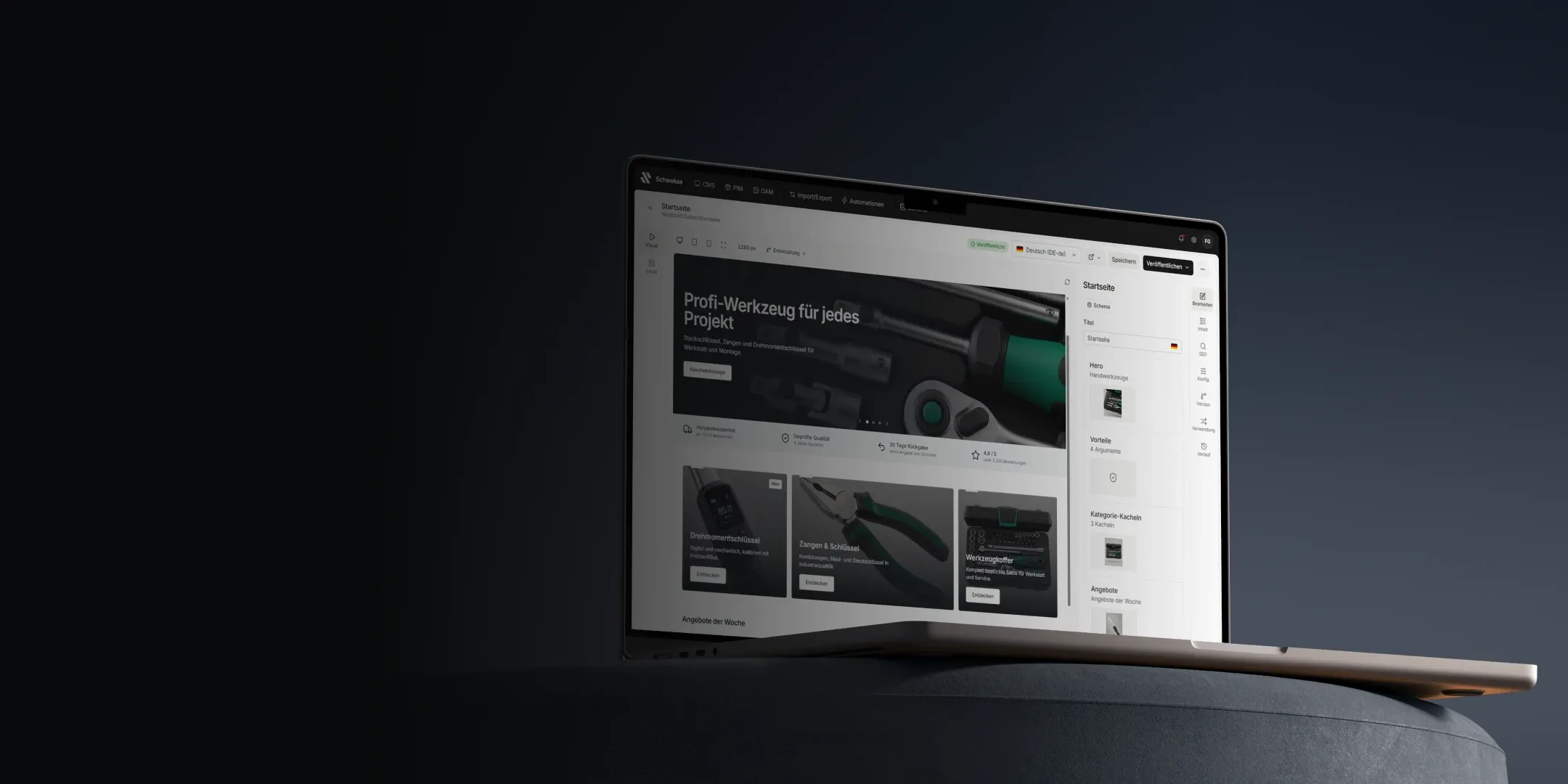
CMS Agency
Your content management solution for digital channels.
Organize content, translations and approvals centrally and deliver them consistently across digital channels. The result is a unified customer experience across markets, languages and channels.
Agency for CMS Systems
When Content Management Outgrows a Website
Many mid-sized companies work with a CMS that works well for one website and a manageable editorial team. But as internationalization grows, more people get involved and additional output channels are added, the number of variants, responsibilities and approvals grows too.
The effort increases as soon as product data, translations and approvals are spread across several systems. Item data from source systems such as ERP or PIM is maintained again in the CMS, changes have to be repeated several times and different versions of content emerge. By then at the latest, a CMS that merely manages a website is no longer enough. What is needed is a well-thought-out solution for content structures, editorial workflows and technical delivery.
Solutions
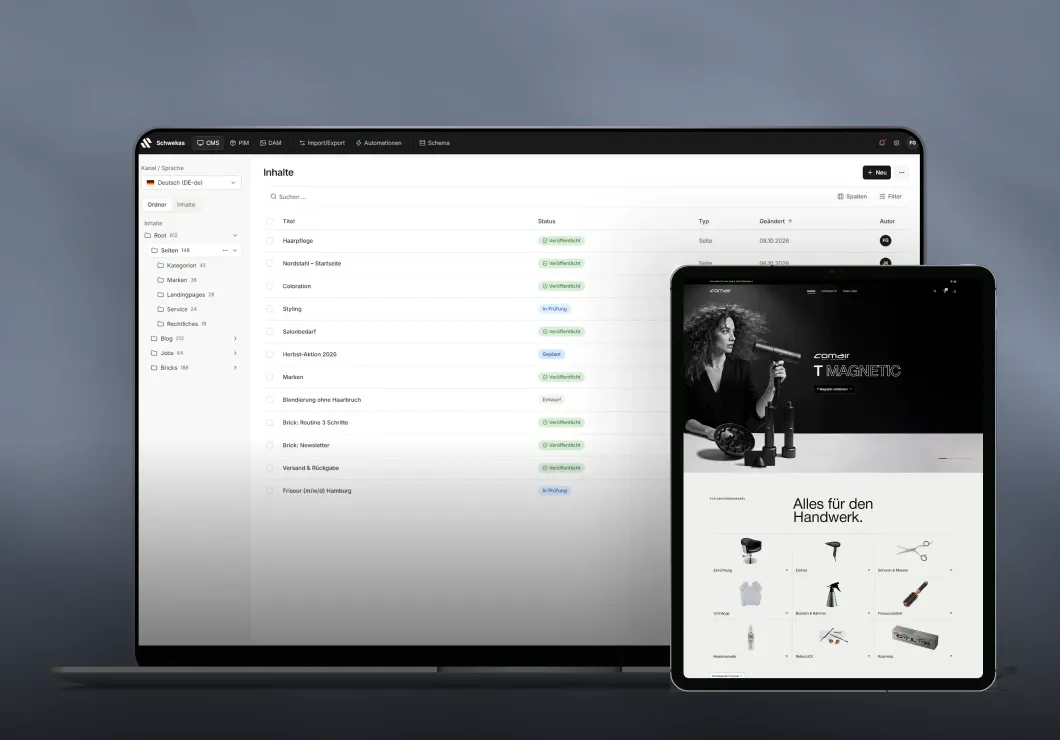
CMS Systems for Content, Markets and Editorial Teams
At Schwekas, a CMS solution combines content structures, editorial workflows and delivery in one technical architecture. Depending on the requirements, we use headless, composable or traditional systems and connect existing data sources.

AI-Powered Content Processes
AI can be integrated directly into existing editorial workflows, for example for translations, text variants or content enrichment. This speeds up recurring content tasks while defined review and approval steps remain in place.

Content Hub for Central Content
Content, media and reusable content components are organized in one central place. Editorial teams thus work with aligned content that can be provided for different websites, applications and other output channels.

Headless CMS for Independent Editorial Teams
A headless CMS separates content management from technical presentation. We set up roles, approvals, previews and editorial features so that teams can maintain and publish typical content themselves, without needing developer support for every change.

API-First for Flexible Architectures
In an API-first architecture, content and functions are made available via defined interfaces. Frontends, apps and other systems can thus be connected and developed independently, without having to fundamentally rebuild the CMS with every extension.

Internationalization and Multilingual Content
Languages, translations, country variants and approvals are organized in a structured way in the CMS. Shared content remains central, while individual markets can receive their own texts, media or variants.

Hosting and DevOps
On request, we also take over the technical operating environment of the CMS. Hosting in Germany, monitoring, backups, deployment, maintenance and updates ensure that the platform can be operated reliably and developed further after go-live.
Key Figures
Manage Content Efficiently and Deliver It Consistently
70%
Less Maintenance Effort
Content and product data are organized centrally instead of being maintained multiple times for different output channels.
+60
Faster Content Delivery
Approvals, translations and variants are managed in a structured way and published faster.
+95%
More Consistent Content
Editorial teams draw on aligned content, so language versions and information remain consistent.


Free Audit
Want to know which CMS suits your editorial team?
Let's speak personally. Our experts will get back to you within 24 hours.
CMS Agency Services
From CMS selection to ongoing operation.
We support your CMS project from consulting through development and system integration to ongoing operation, tailored to your content, editorial processes and existing systems.
CMS Consulting & System Selection
We find the CMS architecture that fits your content, editorial teams and existing systems.
- Headless, composable & traditional
- Platform selection
- Content architecture
CMS Development & Extensions
We implement your CMS and develop custom features when the standard isn't enough.
- Content models
- Roles & workflows
- Custom components
System Integration & Migration
We connect the CMS to existing systems and take over content when you switch platforms.
- ERP, PIM & DAM
- APIs & webhooks
- Content migration
Our Approach as a CMS Agency
How a CMS Project Works at Schwekas
It does not start with the platform but with the question of which content the CMS should hold, how editorial teams will work with it and which systems are involved. From this, we develop the architecture, the platform decision and a clear implementation plan.

Together with the business departments and IT involved, we capture how content is created, reviewed, translated and published today. Existing CMS structures and connected systems are taken into account, as are pain points in day-to-day editorial work. The result is a solid picture of the requirements for the further architecture.
Focus areas
- Content structures and content types
- Roles, approvals and editorial workflows
- Internationalization and translations
- Existing system landscape
Based on the requirements, we evaluate headless, composable and traditional approaches. We define system boundaries, data responsibility and the interfaces between the CMS, frontends and other applications. We apply MACH principles where they bring an advantage for the specific architecture, not as a technical dogma.
Focus areas
- Headless, composable or traditional
- API-first approach and interface strategy
- MACH architecture where it makes sense
- Data responsibility and system boundaries
The CMS is set up and the required content models, components, roles and approvals are implemented. At the same time, we align the technical implementation with editorial use. Working interim releases create clear checkpoints during development.
Focus areas
- Content models and components
- Roles and permissions
- Preview and editorial features
- Custom extensions
Existing content is migrated in a structured way and the required source systems are connected. Data flows and interfaces are tested before go-live, as are the URL structure and redirects in a migration. Depending on the system, integrations use REST, GraphQL, webhooks or custom interfaces, among others.
Focus areas
- Content migration
- ERP, PIM and other system connections
- Data flow and interface tests
- URLs and redirects
Before go-live, we check the technical processes and the editorial use of the system. The teams involved are trained in the new CMS. Afterwards, hosting and technical operation, including monitoring, backups, maintenance, updates and further development, can stay with Schwekas.
Focus areas
- Go-live and technical review
- Editorial training
- Hosting and monitoring
- Maintenance and further development
Is your CMS still designed for today's requirements? Tell us about your current situation. In a free initial consultation, we assess how content, editorial workflows and technical requirements can be brought together sensibly in one CMS solution.
Talk to our experts
Our Strengths
What Sets Schwekas Apart from Traditional CMS and Web Agencies
For us, a CMS project doesn't end with selecting and configuring a platform. We see the CMS as part of your existing system landscape and plan integrations, extensibility, operation and future requirements from the start.

Integration into Your System Landscape
The CMS is not built as an isolated platform. We connect ERP, PIM, CRM, e-commerce and other internal applications via existing or custom-built interfaces and clarify which system holds which data.

Scaling for Traffic, Content and New Channels
We plan architecture and content structures so that additional traffic, growing content volumes and further output channels can be accommodated. Technical components can be scaled as demand increases, while content models can take on new websites, apps or other channels.

Hosting and DevOps Built In
For us, operation is not a downstream handover point. We take hosting, deployment, monitoring, backups, maintenance and updates into account in the architecture, so that development and technical operation fit together.

Extending Systems Instead of Bending Processes
We use standard features where they fit your requirements. If features or interfaces are missing, we extend existing systems where possible or develop custom components around them, so that the technical solution adapts to your workflows and not the other way around.

Multichannel and Omnichannel
New channels are not left until the next relaunch. We structure content and interfaces so that the same content components can be used in different frontends and digital offerings and supplemented for specific channels.

Quick Start with the Schwekas Composable Booster
With the Schwekas Composable Booster, we can use a preconfigured technical foundation for composable CMS projects and build the custom integration into your system landscape on top of it. This means the basic architecture does not have to be rebuilt from scratch for every project.
CMS Agency Advantages
One team, from the platform decision to ongoing operation.
Anyone who introduces a CMS then needs someone who continues to take responsibility for extensions, interfaces and operation. At Schwekas, architecture, implementation, integration and operation remain under the same technical responsibility.

Development with Technical Depth
We develop custom CMS extensions and bring insights from our research into demanding projects.

Connected Systems Instead of Duplicate Maintenance
We connect CMS, ERP, PIM and DAM so that information doesn't have to be maintained multiple times.

Responsibility After Go-Live
On request, operation, maintenance and further development stay with Schwekas.
Technical Benefits
Your Benefits with a Headless CMS
A headless CMS separates the management of content from its technical presentation. This allows content to be maintained centrally and provided to different frontends via APIs. The approach is particularly advantageous where several digital offerings, custom frontends or an extensible system architecture are needed.
Multichannel and Omnichannel
Content is structured centrally and can be provided for websites, apps, portals and other digital offerings. Editorial teams maintain shared content in one place and can supplement or adapt it for each channel.
Multichannel: Central content is delivered to several channels via APIs. Each channel works independently.
Omnichannel: The channels are linked and draw on a shared content foundation.
Multi-Tenant for Brands, Countries and Business Units
A multi-tenant architecture makes it possible to run several brands, countries, websites or business units on a shared CMS foundation while keeping them organizationally separate. Content, roles, permissions and configurations can be controlled individually per tenant, while shared structures and components are developed centrally.
API-First Architecture
APIs are planned from the start as a central part of the CMS architecture. Content and functions are thus available to frontends, apps and other systems via clearly defined interfaces. New applications or channels can be connected and developed further without rebuilding the entire CMS solution.






AI Content and AI Translations
AI can enrich, vary and prepare existing content for different purposes. This includes, for example, supplementary texts, summaries, metadata or language variants. Translations can be created directly from the CMS and prepared for further language versions. Review and approval steps remain part of the editorial process.
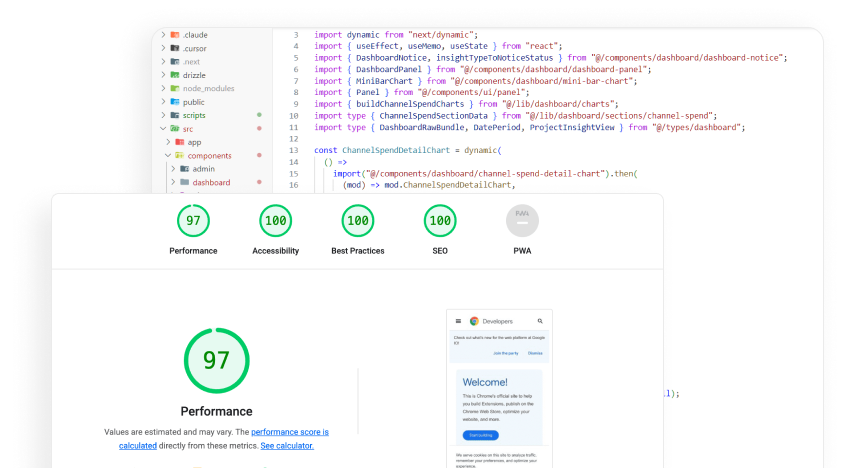
Performance and Security
Frontend and CMS can be operated and optimized independently of each other. This allows performance, caching, access protection and infrastructure to be tailored to the respective application instead of handling all requirements within a monolithic CMS.
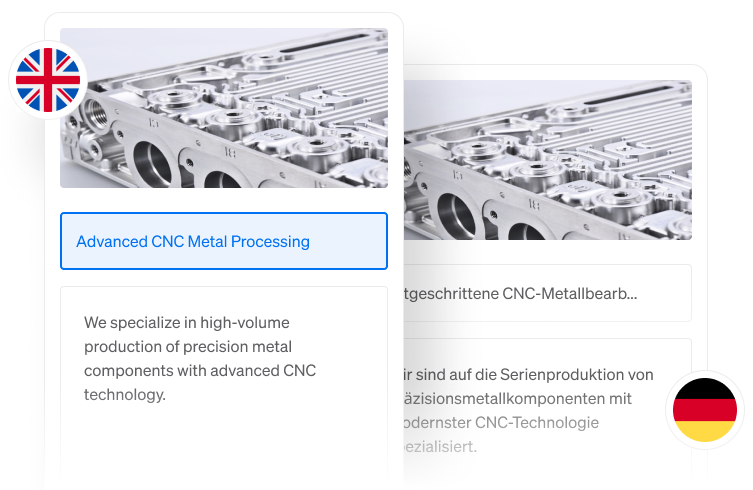
Localization and Market Variants
Language versions, translations and country-specific content can be managed in a structured way. Shared content remains central, while individual markets can receive their own texts, media or variants.
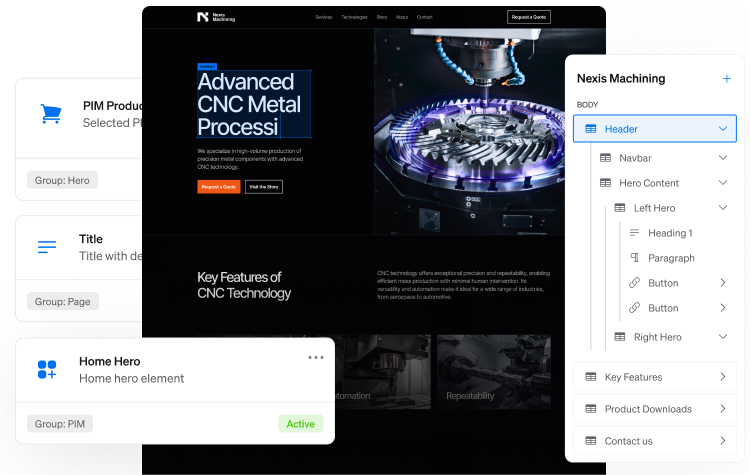
Design Freedom in the Frontend
The frontend is not tied to templates or the presentation layer of the CMS. UX, design and technical implementation can be developed and evolved independently of content management.
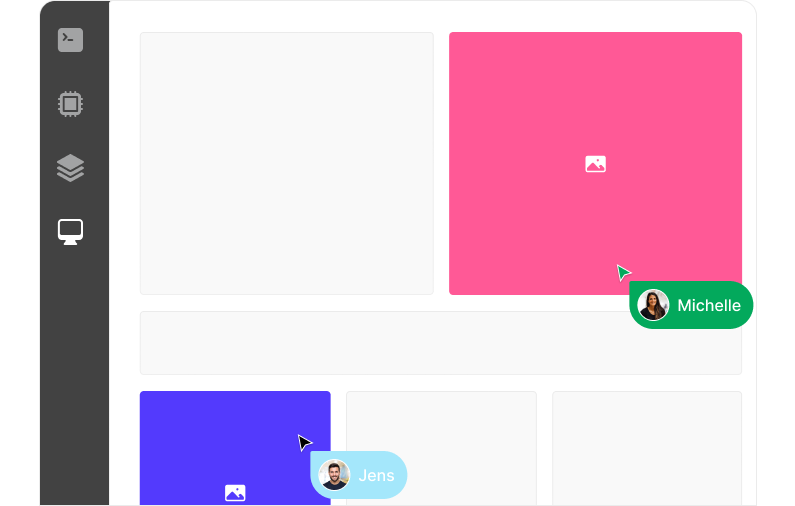
Editing in a Headless CMS
Headless doesn't mean editors have to work technically. Components, visual previews, roles and approvals can be set up so that teams can maintain and publish content on their own.


Project Inquiry
Let's bring your content to every channel.
- Free, personal advice within <24 hrs
- No-obligation quote
More Services
Services and more.
Frequently Asked Questions about headless CMS
A Content Management System (CMS) is software designed to create, manage, and publish digital content. It allows users to easily manage text, images, and other media without requiring extensive programming knowledge, ensuring that your website remains up to date and engaging.
A headless CMS completely separates the backend (content management) from the frontend (presentation). Content is delivered via APIs, allowing it to be flexibly used across various channels and devices – ideal for businesses that need to quickly adapt to market changes.
Popular headless CMS solutions include PayloadCMS and Contentful. PayloadCMS is known for its user-friendly interface, while Contentful follows an API-first approach to deliver content across multiple channels. We are happy to advise you on choosing the right platform and support you through every further step.
A headless CMS pays off when content is to be provided independently of the frontend for several websites, apps or other digital offerings, or when existing systems need to be closely connected. For a single corporate website with manageable requirements, a traditional CMS is often the more economical solution. You can find a detailed assessment under “When Is a Headless CMS Worth It for Mid-Sized Companies”.
Typical triggers are expiring security updates, duplicate maintenance, complex translation and approval processes or editorial workflows that regularly need technical support. Whether this requires a new CMS or whether the existing system should be better connected is something we clarify before the platform decision.
The right CMS architecture depends mainly on your output channels, editorial requirements and existing system landscape. Headless is often a good fit for multiple frontends and digital offerings. Composable combines specialized systems in a modular way. A traditional CMS can be the simpler solution for centrally managed websites with a manageable system landscape.
The costs depend on the platform, content structure, integrations, migration and individual requirements. That is why we don't quote flat project prices. After the initial consultation, you receive a transparent effort estimate and a free, no-obligation quote.
The duration of a CMS migration depends on the volume of content, the content structure, necessary adjustments and connected systems. The migration is planned so that content, URLs and technical dependencies are checked before the switch and the go-live can take place in a controlled way.
The biggest risks are lost content, broken URLs and ranking losses due to missing redirects. We counter this with a migration concept that defines content, URL structure and redirects before the move. Read more under “CMS Migration: Risks and Approach”.
We connect a CMS via the interface that suits the existing system landscape. This can be APIs, webhooks or custom integrations. In the integration concept, we define which system holds which data and how it is exchanged automatically.
Composable CMS refers to an architecture in which the CMS is combined with specialized systems and services into a modular overall solution. Companies can thus select and develop individual building blocks for content, e-commerce, product data or other functions independently. Whether this approach makes sense depends on the actual complexity of the system landscape.
A headless CMS manages content independently of the frontend and delivers it via APIs to connected applications; a traditional CMS combines content and presentation in one system. Headless offers more flexibility with multiple frontends, while a traditional CMS often remains simpler for a single website.
Yes. On request, we take over hosting and technical operation in Germany, monitoring, backups, maintenance, updates and support as well as ongoing further development. We train editorial teams at the end of the project and, if needed, for later extensions.
Want to simplify your content management?
Ferhat Fraj DogruolLet's talk personally.