

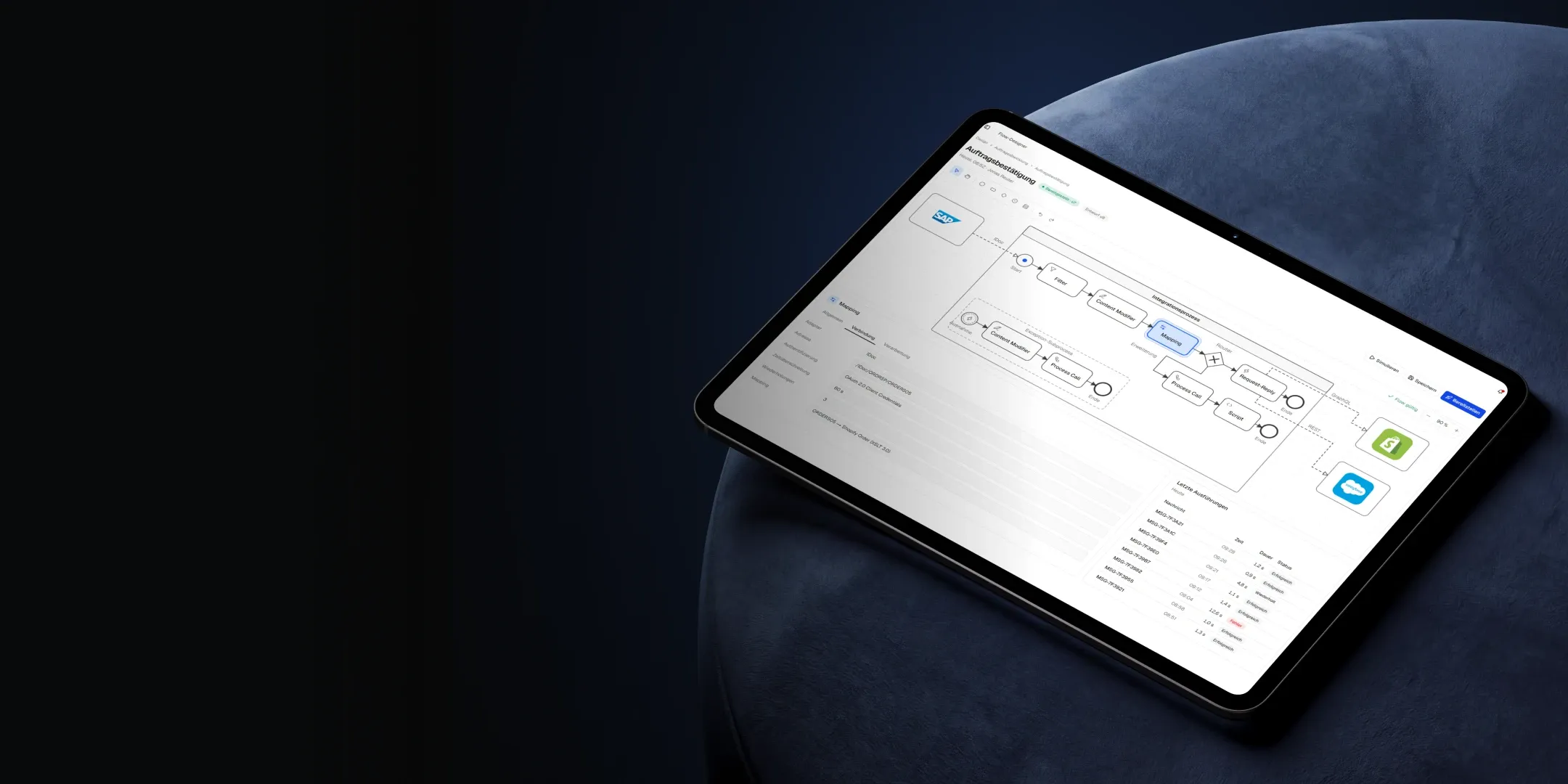
Interface Development Agency
We develop scalable, high-performance interfaces.
Schwekas plans and develops custom interfaces between systems: PIM, ERP, e-commerce, CRM and external applications. Including infrastructure, logging, monitoring and operation.
Why Interfaces
When Systems Are Not Connected
Many mid-sized companies know exactly that an interface is missing: the ERP should receive orders from e-commerce, the PIM should deliver product data to several channels. What is missing is someone who plans the connection and also implements it. Internally, there is neither the time nor the specialization for it.
Other companies are not initially looking for an interface at all, but for a solution to the consequences of missing connections: data is exported, reworked in Excel and transferred to the next system by hand. In both cases, the first step is to clarify how the systems can be connected sensibly. If a standard connector is not enough, we develop the right custom interface.
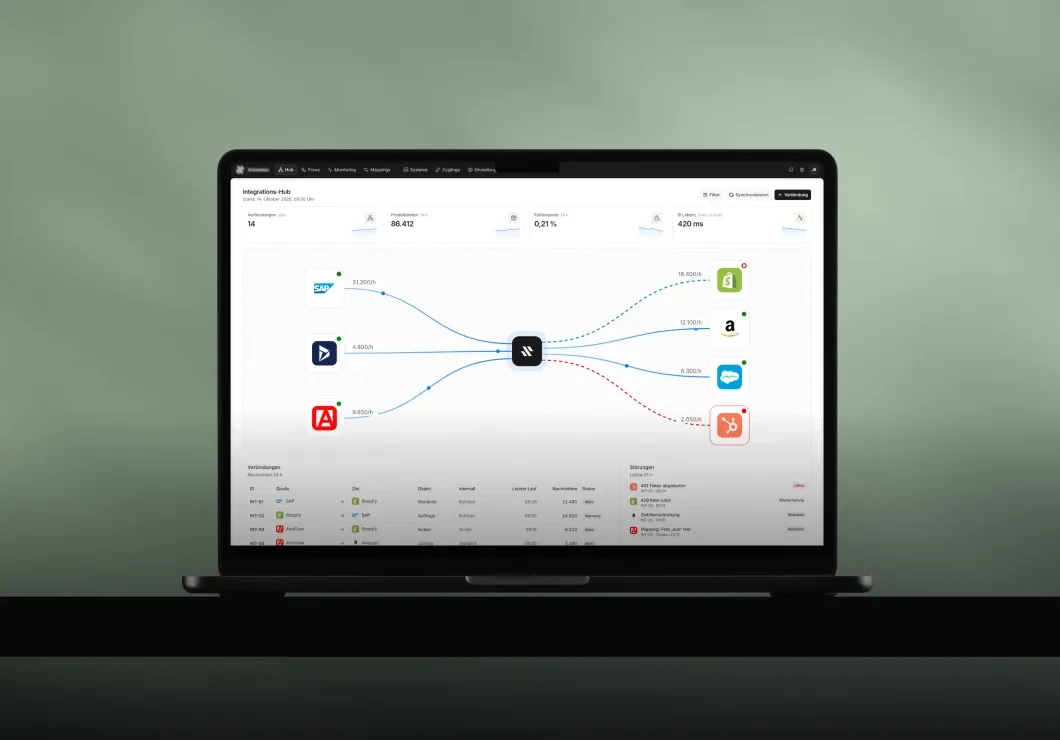
Key Figures
Efficiency Through Cleanly Integrated Systems
20M+
Records
Processed per project, designed for large data volumes and peak loads
-60%
Manual Data Transfer
No more exporting, reworking in Excel and transferring by hand
99.99%
Availability
Thanks to a scalable, high-performance architecture
Interface and API Solutions
Interfaces for Every Use Case
A custom interface is a connection developed specifically for your systems that automatically transfers, validates and processes data according to defined rules. Schwekas develops such connections for businesses.
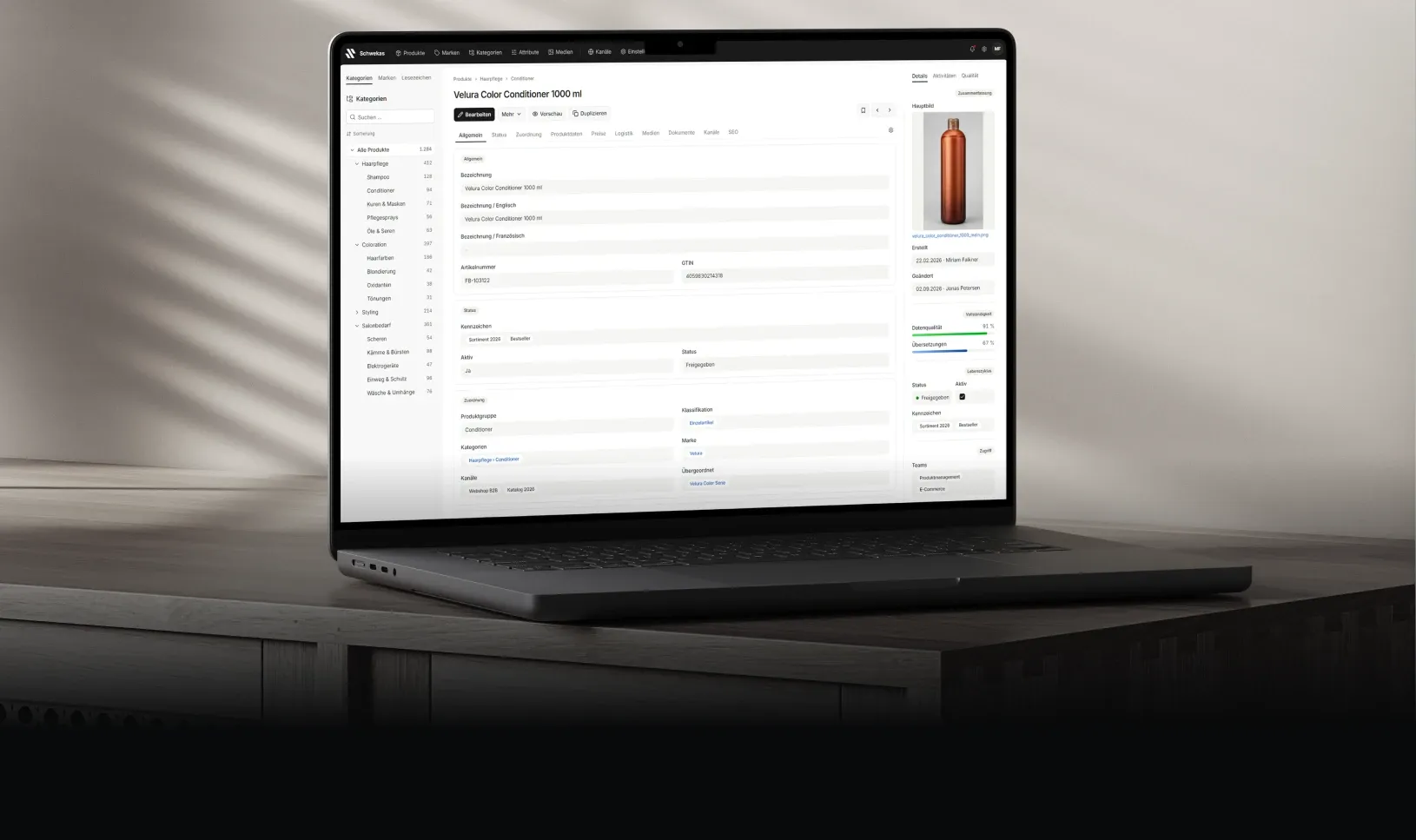
PIM and Product Data
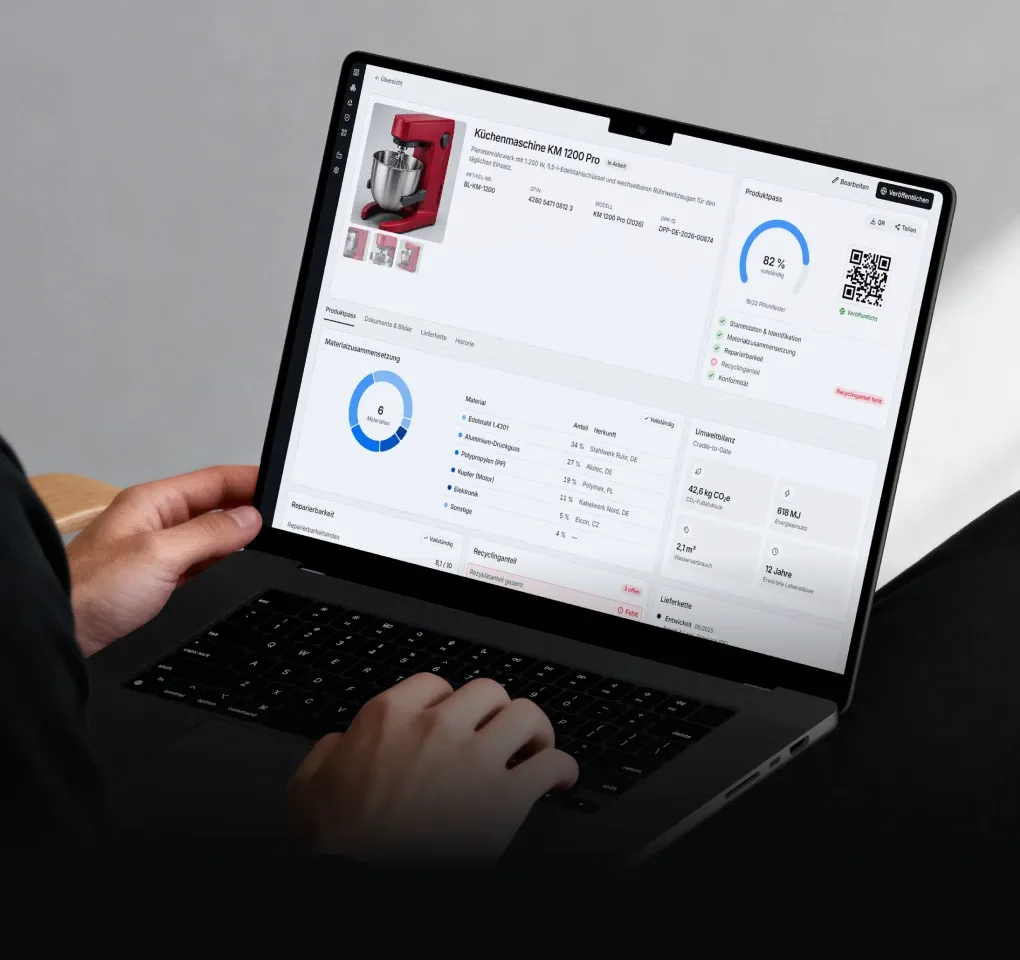
Product data from the PIM reaches e-commerce, marketplaces and other channels consistently, without duplicate maintenance in separate systems.

ERP and E-Commerce
Orders, stock levels and prices are continuously synchronized between ERP and e-commerce instead of being processed by hand.
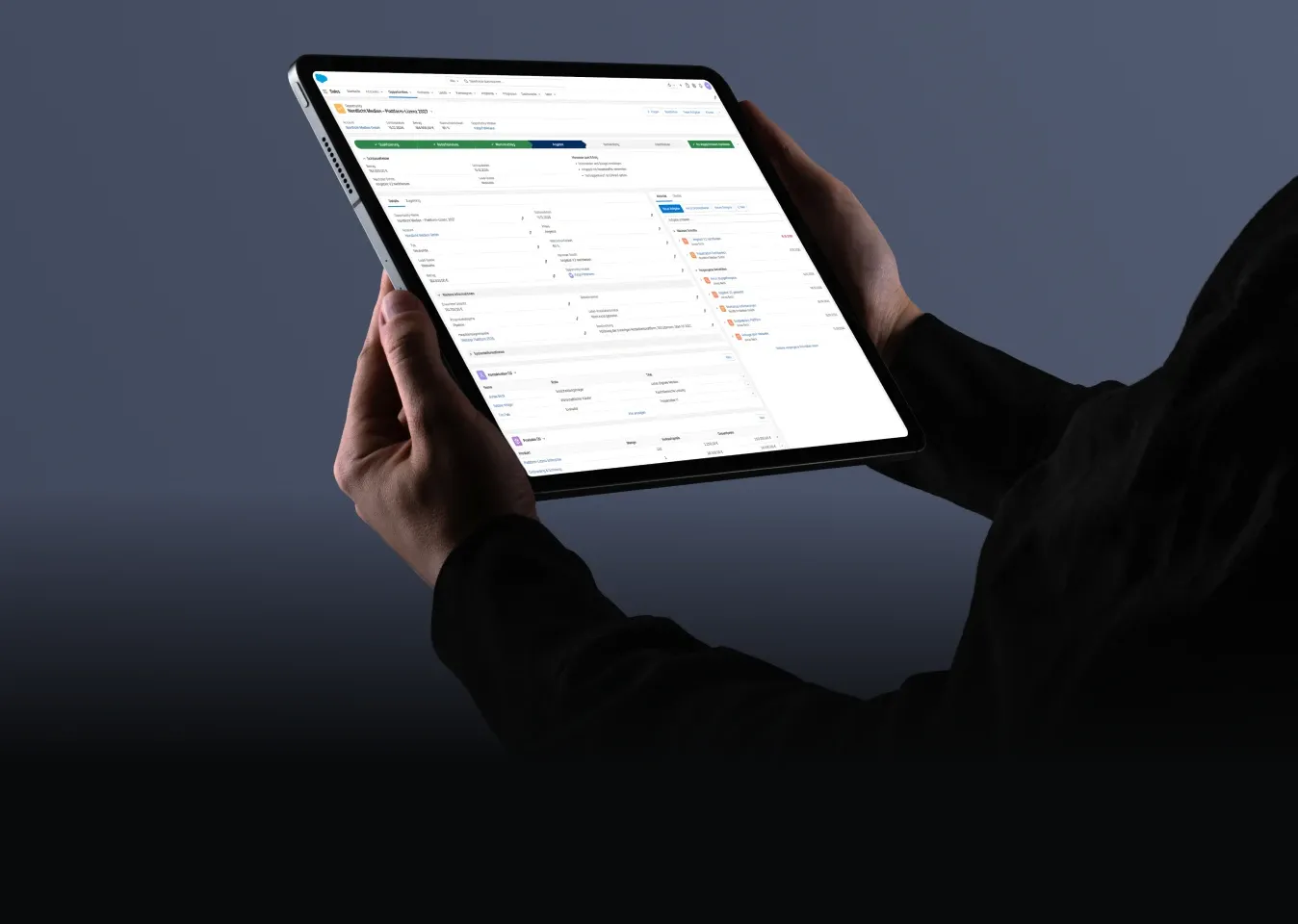
CRM and Sales Processes
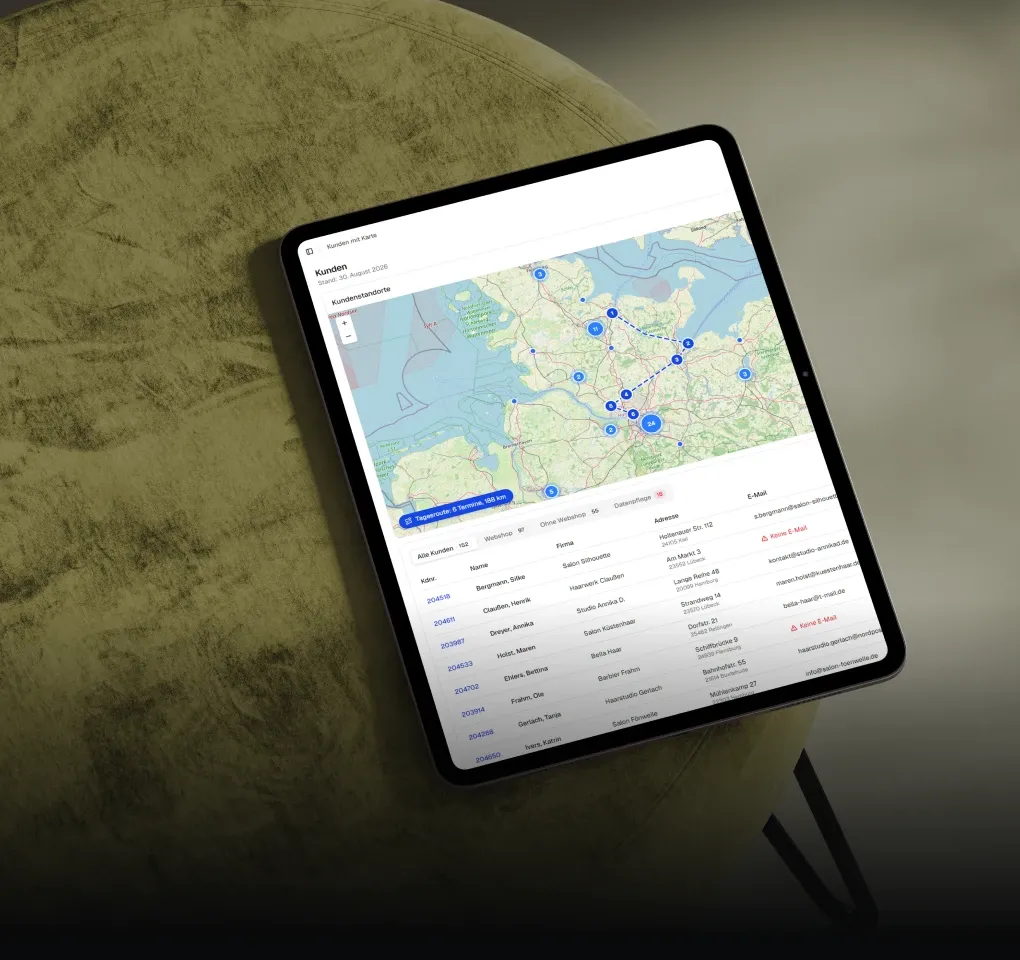
Customer, quote and order data stay consistent between CRM and ERP, even with custom quoting and sales processes.
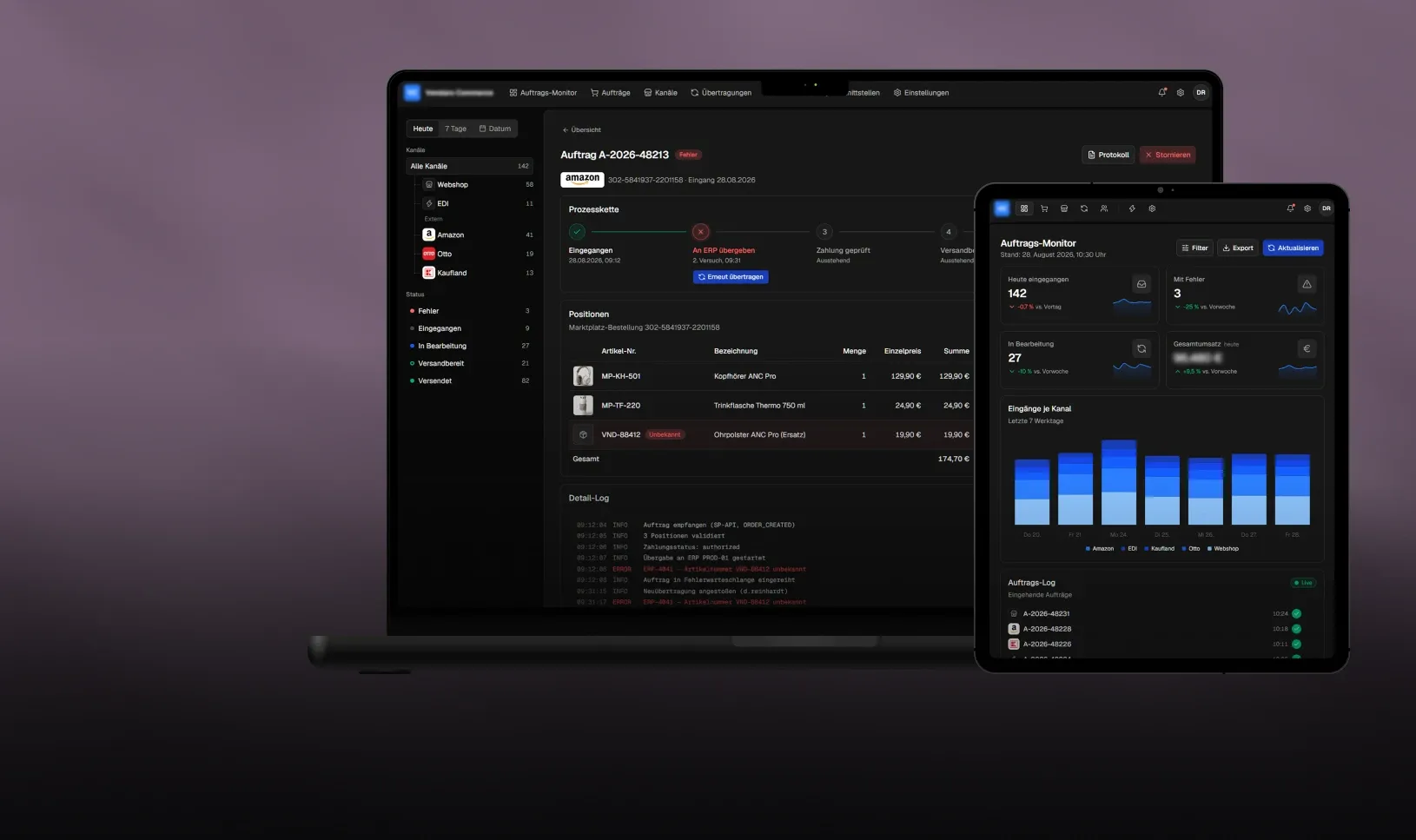
Internal Applications
Internal tools, dashboards and databases receive the data teams need for review, approval and reporting.


Free Audit
Which data do your employees still transfer by hand today?
Let's speak personally. Our experts will get back to you within 24 hours.
Interface Development Services
What Schwekas Handles in Interface Development
Schwekas handles the analysis, the interface programming and ongoing operation. Before development, we clarify which data originates in which systems, how it is structured and in what form the target system needs it.

Analysis and Data Model
We map systems, data flows and technical access points and define the interface's data model. That way, it is clear before development which data flows in which structure.

API Development
We develop custom endpoints, authentication and data transformations: as a REST API, a GraphQL interface, SOAP, XML, EDI or as a webhook for real-time events.

Business Logic and Data Processing
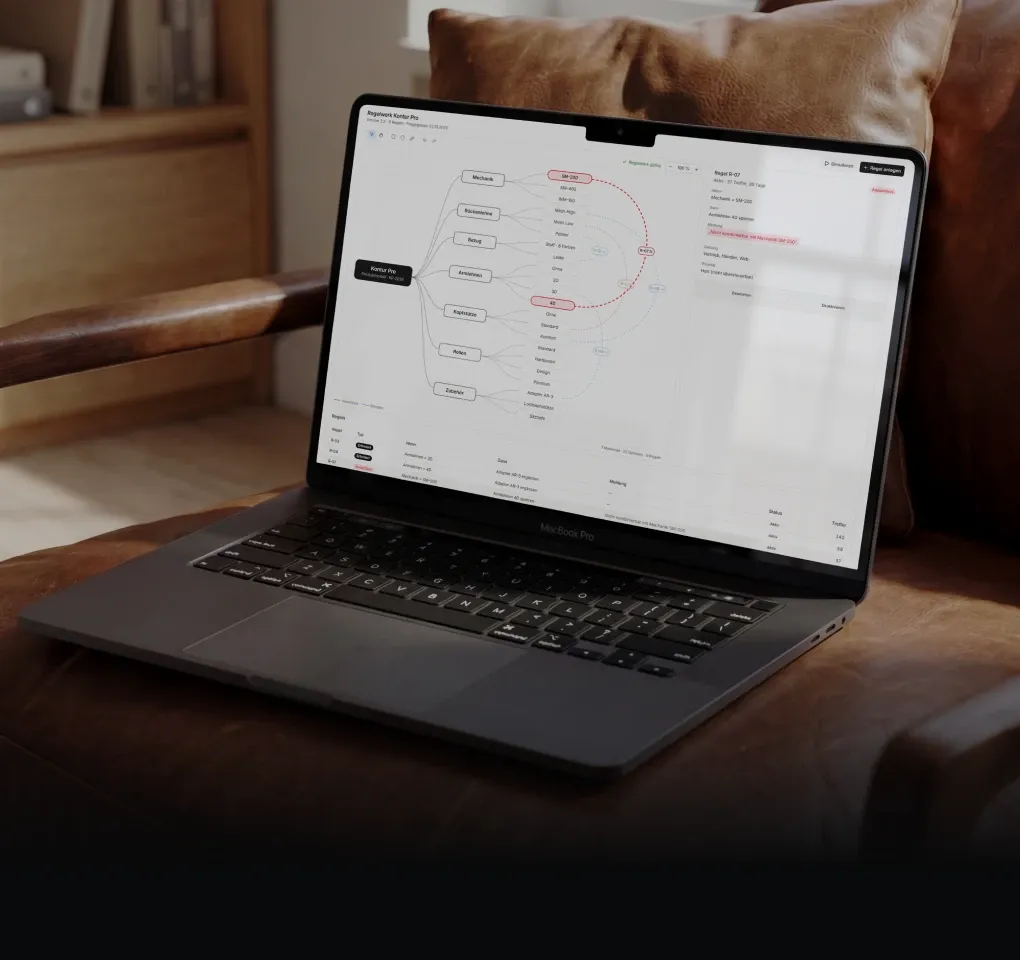
Data is not just transferred. We map your rules, validate records, transform formats and handle edge cases traceably.

Infrastructure, Monitoring and Operation
We provide the required infrastructure and make data transfers traceable through logging and monitoring. Your team can also be given access and check the status of the interface itself.
Our Approach
From Requirement to Running Interface
It does not start with the first endpoint but with a clear picture of the data flows. What matters is which systems are involved, which data must flow in which form and which rules apply.
Step 1: Analysis of Systems and Data Flows
We clarify which systems are to be connected, which data flows and which technical access points exist.
Step 2: Quote and Schedule
After the analysis, you receive a binding quote with a realistic schedule, usually at a fixed price, before development begins.
Step 3: Interface Concept and Data Model
The concept defines how data is transferred, transformed and kept consistent, and how error cases are handled.
Step 4: Development and Testing
We develop the interface and test it with real data, including edge cases, error scenarios and peak loads.
Step 5: Go-Live, Monitoring and Operation
The interface goes live in a controlled way. Logging and monitoring run from day one; on request, we take over operation permanently.
Our Strengths
What Sets Schwekas Apart from Other Interface Agencies
Many interface projects fail not because of the programming but because data is not transferred efficiently or in the right data model. That is why Schwekas defines before development which data flows, how it is structured, how error cases are handled and what the implementation costs.
- We have many years of experience with various interface standards, from REST and GraphQL to webhooks, SOAP/XML and EDI.
- We develop interfaces for very large data volumes and custom business logic, not just simple data handoffs.
You get infrastructure, logging, monitoring and operation from a single source, not just the connection.

Short Timelines Through Experience
We have been working with a wide range of interface types and systems for many years. Much of what has to be worked out first in other projects is routine for us. That shortens planning and implementation and makes effort predictable early on.

Large Data Volumes and Custom Business Logic
We develop interfaces that remain performant even with large data volumes and peak loads. And we map custom business logic: data is not just transferred but validated, transformed and processed according to your rules.

Scalable Infrastructure
If needed, Schwekas provides the infrastructure so that interfaces run stably and can be extended as requirements grow.

Extensible for New Requirements
Interfaces are planned so that new applications, platforms or processes can be connected later.


Project Inquiry
Let's talk about your interfaces.
- Free, personal advice within <24 hrs
- No-obligation quote
More Services
Services and more.



About Interfaces
Advantages of an IT Agency for Interface Development
Today, companies use a wide range of systems to manage their business processes efficiently: from ERP and PIM systems to e-commerce platforms, payment providers, logistics services and CRM solutions. Only when these systems are seamlessly integrated can automation be used to its full potential, manual effort be reduced and data be managed consistently across all channels.
Integrating CMS systems into existing B2B processes or extending internal workflows through interface connections also offers companies decisive added value. Whether for managing content centrally, integrating external data sources (e.g. job data, product information or leads) or optimizing existing processes: targeted system networking increases efficiency and opens up new digital opportunities.

Experience in Complex System Landscapes
We connect a wide variety of applications and ensure seamless data exchange between your systems.
Extensive Expertise in Interface Technologies
Using modern technologies and standards such as GraphQL, REST, XML and SOAP, we connect existing and new systems securely and efficiently.
High Quality and Comprehensive Testing
Every integration undergoes careful testing to ensure stable, secure and reliable data transfer.
More Than Just Interfaces
On request, we analyze your entire IT infrastructure, optimize processes and identify untapped potential for a more efficient digital system landscape.
Optimal System Integration. End-to-End
We help companies make their processes more efficient through automation. To do so, we integrate a wide range of tools and solutions that are optimally aligned with your existing system landscape. Here is a small selection.
E-Commerce
- PIM Systems
- Shopify
- Shopware
- Amazon
- Algolia
- Elastic Search
- and many more
ERP
- Microsoft Dynamics NAV
- Microsoft Business Central
- SAP
- JTL Warenwirtschaft
Payment Providers & Tools
- PayPal
- Stripe
- Klarna
- Nextmart
- Job Portals
- and many more
CRM and Marketing
- HubSpot
- Salesforce
- Newsletter Tools
Custom Data Processing
- Databases
- Various File Formats
- Automated Data Writing and Reading
Frequently Asked Questions about interface development
A custom interface pays off when a standard connector cannot cleanly map the systems, data models or process rules involved. Typical triggers are legacy systems without a modern API, custom business logic and large data volumes. For standardized connections between common cloud systems, a standard connector often remains the more economical choice. You can find a detailed comparison under Standard Connector or Custom Interface.
Yes. We connect older legacy ERPs without a modern API via SOAP/XML, EDI or custom-built access points. The existing system stays in use and does not need to be replaced for the connection.
The cost of a custom interface depends mainly on the systems involved, the data structures, the business logic and the requirements for operation and monitoring. That is why Schwekas does not quote flat prices on this page. After a short analysis, you receive a binding quote, usually at a fixed price, before development begins.
The duration depends on the scope of the connection, the available technical access points and the business logic. We don't have to redesign recurring tasks for REST, GraphQL, SOAP/XML or EDI every time, so the effort can be estimated better early on. You receive a realistic schedule together with the quote after the analysis.
Even systems without complete API documentation can often be connected. We examine the available technical access points such as database structures, export formats, file interfaces or existing partial functions and, based on this, define a traceable integration path.
If a connected API changes, the interface may need to be adapted. Monitoring and logging help to detect resulting errors early and trace their cause. During ongoing operation, we can take care of adapting to new API versions.
REST is suitable for many classic system connections, GraphQL for flexible queries of more complex data structures. Webhooks complement these interfaces when a system should actively send data to another system when an event occurs. Which combination makes sense depends on data volume, transfer direction and the required timeliness.
A direct connection is often sufficient when two systems have a clearly defined data exchange. Middleware makes sense when several systems use the same data, require central transformation rules or when workflows need to be coordinated across systems. This keeps the integration logic in one central place instead of spread across many individual connections.
The interface is documented so that data flows, relevant endpoints and error handling remain traceable. You receive the documentation as well as the agreed access to logging and monitoring. We can take over operation or hand it over to your team.
Yes. Interfaces can be built step by step: first the connection with the greatest operational leverage, then further systems, data types or processes. The foundation developed along the way is reused.
Want your data to move automatically from system to system?
Ferhat Fraj DogruolLet's talk personally.